
Heute Nacht ist es zu einem hinterfotzigen Gewaltanschlag auf ein Flüchtlingsheim in Vintl gekommen, bei dem mittels mehrerer Molotow-Cocktails glücklicherweise nur Sachschäden verursacht wurden. Das ist ein offensichtlich rassistisch motivierter Akt gegen Menschen, die vor untragbaren Zuständen in ihrer Heimat geflüchtet sind, aber auch gegen alle, die eine tolerante, solidarische und inklusivistische Gesellschaft wünschen. Dagegen müssen wir gerade in solchen Augenblicken zusammenstehen, wenn wir es mit der »Freiheit« ernst meinen. Gewalt ist, zumal in einem demokratischen Land, kein legitimes Mittel der Politik — aber vielleicht sollten wir in Hinkunft auch zunächst »harmloser« wirkende Formen von Rassismus und Intoleranz im politischen Alltag deutlicher verurteilen. Sie bieten den Radikalsten einen fruchtbaren Nährboden.
-
Feiger Einschüchterungsversuch.
Autor:a
ai
|
8 Comentârs → on Feiger Einschüchterungsversuch.Einen Fehler gefunden? Teilen Sie es uns mit. | Hai trovato un errore? Comunicacelo. -
Rätselspaß.

Auf den ersten Blick sehen diese zwei Titelbilder genau gleich aus. Wenn Sie genau suchen, werden Sie aber einen klitzekleinen Unterschied finden!
Medien/ Militär/ Politik/ Satire/ · Medienkritik/ · · ff/ · Südtirol-o/ · Alpini/ Schützen/ · Deutsch/Einen Fehler gefunden? Teilen Sie es uns mit. | Hai trovato un errore? Comunicacelo. -
The Hong Kong Experience.
What does it mean to “belong to a nation”?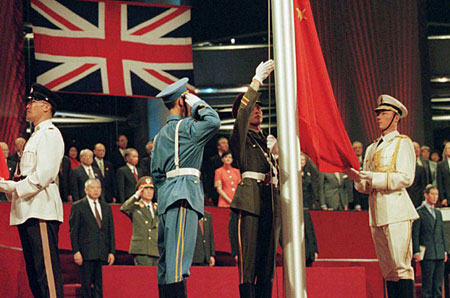
by Joachim Prackwieser
Remember, boy, that behind all these men… behind officers and government, and people even, there is the Country Herself, your Country, and that you belong to her as you belong to your own mother. Stand by her, boy, as you would stand by your mother…!
(Hale, The Man Without a Country: 35)
This passage is taken from the short story The Man Without a Country by the American novelist Edward E. Hale [i], which tells the story of a tragic misfit, Lieutenant Philip Nolan, who had renounced his country under oath and, consequently, was sentenced to spend his life at sea, denied returning to his country ever again. Moreover, the verdict ordered his sentinels to never pronounce the name of “his country” or talk about matters concerning it in his presence. However, not embracing the idea of having a country because he never learnt its meaning, the protagonist has not been affected much by his fate for some time. Yet, it didn’t take long before he grew aware that the people surrounding him, mostly navy soldiers, tied many aspects of their life to this concept by now, thus depriving him of any news and information about the place he was born. It was in this condition that he uttered the above quoted advice to the narrator, surrendering himself to the unifying schemes of the era of the nation states. Much like Hale’s protagonist, Hong Kong people have not been bothered by their lack of national identity [ii]; they have not needed this concept until they were confronted by those of their “motherland” China, who indeed possess such an identity. It was from midnight 1 July 1997 on, when Hong Kong was officially returned to China after 150 years under British colonial rule that the Hong Kong people had to cope intensively with this confrontation.
Before continuing with the period after 1997, a quick glimpse on the origin of the Hong Kong people’s lack of national identity shall be offered. First and foremost, it was a matter of colonial rule to keep them at distance from any national identity whatsoever: Hong Kong’s linkage to China was downplayed to legitimate British rule, yet its bonds to Great Britain were downplayed at the same time to prevent the inhabitants from applying for the right of abode in Great Britain. Second, China’s transformation into a communist state greatly facilitated the Hong Kong people’s dismissal of national identity, as it triggered alienation and a sense of menace among them. Mao’s dictatorship that caused turmoil of hitherto unseen scales, e.g. the Great Leap Forward (1958-62) or the Great Proletarian Cultural Revolution (1966-76) ending in tens of millions of deaths, and from which many sought shelter in the British colony, shaped this “refugee mentality” [iii]. It caused the phenomenon of a one-sided development that can be labelled “market mentality” [iv]: In contrast to the two omnipresent and contradictory discourses in most countries, state and market, the greater part of the Hong Kong people have been moulded by only one discourse – that of the market. Hong Kong’s identity became defined by the loyalty to the global market over any state. At the end of this transformation, having taken place during the 1970s and 80s, money and family were all that mattered and could be trusted. In other words, not survival but choice in terms of consumption with little concern about national identity determined people’s lives from then on. This way of thinking even led to a comprehensive rejection of the mentality of the state.
Law (in the common law embodiment) and the introduction of what can be labelled “welfare colonialism” played an important role in providing a frame to this mentality: Large scale riots had broken out in the 60s, triggered by severe social inequality which stemmed from the mesmerizing economic boom Hong Kong was experiencing back then. In this period the colonial government’s very right to rule had been questioned. In order to evade this crisis of legitimacy and close the gap with its citizens, the administration could have introduced some form of representative government. As Jones argues, the government engaged instead in a wider process of hegemonic restructuring by introducing a “consultative machinery to provide readier access to government” accompanied by “an impressive programme of welfare colonialism.” [v] The foremost means to achieve this restructuring was the law that acquired a crucial role in ideological terms, by setting new rules of engagement between state and society. Important in this regard is that law, employed this way, provided an alternative channel of redress and more importantly a means of governance, thus avoiding democratic reform.
Before this background, post-handover Hong Kong has to be read and understood. First of all, the distinction between Hong Kong and Mainland China is apparent in many ways: In Hong Kong mass media and internet are not censored, permanent residency for foreigners is permitted and British rule had a lasting influence on the way of life, core values and the outlook resembling the Western world. Therefore, since 1997 Beijing makes use of different channels to instil the Chinese national identity into the inhabitants of the then instituted Hong Kong Special Administrative Region, a territory under direct supervision of the Central People’s Government. National identity is being taught through mass media, which has been changing its portrayal of Mainland Chinese and China over the past several decades from negative towards very positive and national symbols are omnipresent (e.g. the playing of the Chinese national anthem is mandatory before the news). Another important channel to teach Hongkongers to belong to the country is schooling: different measures have been developed to shape the school children’s image of China as their motherland from kindergarten onwards. However, the inhabitants’ reaction to this endeavour is varied. While some Hongkongers are happy to finally be able to embrace a clear sense of identity, many more insist on their distinctiveness. National identity is often reflected upon critically and consciously, where arguments range from the viewpoint that national belonging involves rediscovering one’s long-lost home and roots to the opinion that national belonging means surrendering to state propaganda (think of Lt Philip Nolan). This attitude is readily proven by several protests and bold lawsuits against the Beijing instituted HKSAR Government in the tradition of law as the channel of redress, placing Hong Kong’s courts into a position of guardians of rule of law and human rights, which they assumed with exigent sense of responsibility. Yet, protests diminish in scale and the courts are not armoured for a longstanding fight against Beijing [vi]. A new form of “belonging to the nation” seems to be coined by the Hong Kong people in recent years, consciously or unconsciously. It is one apparently derived from their inherent market mentality, based on the discourse not of the state but of the market. They shift their allegiance towards the country as they might shift their allegiance towards a consumer product, e.g. a young Hongkonger may define his feelings towards the Chinese national flag in terms of whether it is fashionable or unfashionable like adjudicating on a t-shirt, thus totally disregarding its symbolic significance. Especially in the sphere of business, faith in the national market of China serves as a substitute for faith in the Chinese state. In other words, the market enables an alternative form of loyalty to China.
Edward Hale was an apologist of the nation state. Therefore, it is no wonder that he lets embrace his protagonist the concept in the end. However, the Hong Kong experience shows that a different and paradoxical form of belonging to a nation is viable, when “Capitalism as Religion” in Walter Benjamin’s reading has been adopted by a society. Benjamin states in this essay that capitalism is a “Kultreligion, vielleicht die extremste, die es je gegeben hat. Es hat in ihm alles nur unmittelbar mit Bezug auf den Kultus Bedeutung, er kennt keine spezielle Dogmatik, keine Theologie.” [vii] Capitalism thus permits such a society to reject the Dogmatik and Theologie of the state, yet at the same time to develop bonds to it through a consumerist approach.
The ensuing questions come intuitively to my mind (while many more could be developed):
- Can a Hong Kong style market mentality be traced among South-Tyrolese of Austro-Hungarian descent, where “money and family are all that matters and can be trusted”?
- If this is the case, does it assume a similar role of accepting some and rejecting other symbols representing the Italian state over time, grounding on a consumerist choice (not only symbols like flags but also sports and cultural idiosyncrasy like music, food etc.), while largely rejecting the state as an abstract reference point?
- Consequently, have these South-Tyrolese already learnt to appertain to the Italian nation to a certain degree as the people of Hong Kong have done to China?
- Yet, interestingly, more and more South-Tyrolese voice the opinion that South Tyrol should declare independence because Italy’s economic situation endangers South Tyrol’s prosperity. Is this a step beyond the Hong Kong experience (there, China is the prosperous giant supporting Hong Kong, which had been severely struck by the Asian Crisis), i.e. a society based on the market mentality is not only able to adapt to an alien nation, but at the same time can easily renounce this nation when the sine qua non of this mentality, the economy itself, is jeopardised?
[i] Hale, Edward Everett. The Man Without a Country: And Other Tales. Boston: Roberts Brothers, 1888.
[ii] National identity is a modern phenomenon that only fully permeated the people when they began to feel that they intrinsically belong to a nation to which they should “naturally” be loyal. Cf. Gellner, Ernest. Nations and Nationalism. Ithaca: Cornell University Press, 1983. According to Eriksen, “urbanization and individualism create a social and cultural vacuum in human lives… Nationalism promises to satisfy some of the same needs that kinship [and religion] was formerly responsible for”. Cf. p. 107 in Eriksen, T. H. Ethnicity and Nationalism: Anthropological Perspectives. London: Pluto Press, 2002.
[iii] Cf. p. 15 in Mathews, Gordon, Eric Kit-wai Ma and Tai-lok Lui. Hong Kong, China : Learning to Belong to a Nation. Abingdon: Routledge, 2008.
[iv] Ibid.
[v] Cf. p. 46 Jones, Carol. “Politics Postponed: Law as a Substitute for Politics in Hong Kong and China.” In Law, Capitalism and Power in Asia : The Rule of Law and Legal Institutions, edited by Kanishka Jayasuriya. London; New York: Routledge, 1999.
[vi] Art 158 of Hong Kong’s “mini-constitution”, the Basic Law, provides Communist China’s centre of power, the Standing Committee of the National People’s Congress, to have the last say on interpretational issues of the Basic Law, thus deviating considerable influence from Hong Kong’s courts towards Beijing.
[vii] Benjamin, Walter, Theodor Wiesengrund Adorno, and Gershom Gerhard Scholem. Gesammelte Schriften. 6, [Fragmente vermischten Inhalts – Autobiographische Schriften]. Edited by Rolf Tiedemann and Hermann Schweppenhäuser. Frankfurt am Main: Suhrkamp, 1985, pp. 100-102.
I cuntribuc esterns ne spidlea nia for la minonga o la posizion de BBD, nsci coche i/la autëures ne sustën nia for i fins de BBD. · Autor:innen- und Gastbeiträge widerspiegeln nicht notwendigerweise die Meinung oder die Position von BBD, so wie die jeweiligen Verfasser:innen nicht notwendigerweise die Ziele von BBD unterstützen. · I contributi esterni non necessariamente riflettono le opinioni o la posizione di BBD, come a loro volta le autrici/gli autori non necessariamente condividono gli obiettivi di BBD. — ©Colonialismi/ Comparatio/ Cultura/ Geschichte/ Kleinstaaten/ Politik/ Wirtschaft+Finanzen/ · · · The Guardian/ · China/ Hong Kong United Kingdom/ · · English/Einen Fehler gefunden? Teilen Sie es uns mit. | Hai trovato un errore? Comunicacelo. -
Landesgericht verhöhnt Deutschsprachige.
Bereits vor geraumer Zeit hatte ich angeprangert, dass sich in Südtirol die Justiz — die eigentlich der Missachtung von Gesetzen Einhalt gebieten müsste — über Pflichten wie jener zur Zweisprachigkeit hinwegsetzt. Dass sich seitdem nichts geändert hat, beweist die Webpräsenz des Landesgerichts eindrücklich: Die katastrophale deutschsprachige Version der Seite ist faktisch unbrauchbar. Zu allem Überfluss ist im Disclaimer von »größter Sorgfalt und Aufmerksamkeit« die Rede, was in diesem Kontext nach reinster Verhöhnung klingt.
Einige Schnappschüsse der deutschen Version (!?) der Homepage:


Zum Vergrößern anklicken. Hauptseite (oben links); Suchmaske Immobilienversteigerungen (o.r.); Versteigerungskalender (u.l.); gefundenes Versteigerungsobjekt (u.r.) – Markierungen von mir
Im Grunde beschränkt sich die »deutsche« Seite im Großen und Ganzen auf die Immobilienversteigerungen, also auf den Bereich, wo mit den Bürgerinnen Geld gemacht wird. Wichtige Dienste und Informationen wie Öffnungszeiten des Gerichts, Formulare, Ausländernotariat, gemeinnützige Arbeiten und selbst sprachlich relevante und sensible Dienstleistungen wie die Einsichtnahme und die Bestätigung der erfolgten Sprachgruppenzugehörigkeitserklärung sind ausschließlich über die italienische Version der Seite erreichbar. Letztere ist von der deutschen Seite nur über den Verweis www.provincia.bz.it (vgl. Abb. oben links) verlinkt, aber da muss man schon selber draufkommen.
Discriminaziun/ Justiz/ Nationalismus/ Plurilinguism/ Recherche/ Recht/ Service Public/ Sprachpfusch/ Vorzeigeautonomie/ · Bilinguismo negato/ · · · · · Deutsch/Einen Fehler gefunden? Teilen Sie es uns mit. | Hai trovato un errore? Comunicacelo. -
CDU hetzt gegen Minderheiten in Schleswig.
Bereits nach der Landtagswahl in Schleswig-Holstein 2005 war es zum Eklat gekommen: Als die Partei der dänischen und friesischen Minderheiten, der Südschleswigsche Wählerverband (SSW) nach Sondierungsgesprächen angekündigt hatte, eine Regierung von SPD und Grünen unter Ministerpräsidentin Heide Simonis (SPD) tolerieren zu wollen, machten Spitzenvertreter der Bundes-CDU massiv Stimmung gegen die Abgeordneten des SSW. Sie hätten sich zurückzuhalten und dürften sich nicht in die Regierungsbildung einmischen, da sie schließlich »nur« eine Minderheit verträten (weshalb sie unter anderem von der 5%-Sperrklausel befreit sind). Besonders der damalige hessische Ministerpräsident Roland Koch tat sich darin hervor, die Abgeordneten des SSW als Volksvertreter zweiten Ranges darzustellen und drohte, die CDU würde sich im Falle einer Tolerierung für die Abschaffung von Sonderrechten einsetzen. Dazu kam es nicht, da die Unterstützung an der missglückten Wiederwahl von Heide Simonis durch den Landtag scheiterte.
In der Schlussphase des laufenden Wahlkampfs zur vorgezogene Landtagswahl am kommenden Sonntag schlagen die Christdemokraten jetzt erneut raue Töne an: Da sich der SSW diesmal bereits im Vorfeld auf eine eventuelle Koalition mit SPD und Grünen festgelegt hat, wird er von Landesvertretern der CDU scharf angegriffen. Und wie 2005 beschränkt sich das Gefecht nicht auf politische Inhalte. Stattdessen hoben die Schwarzen die Debatte schon wieder auf die ethnische Ebene und wettern seitdem offen gegen eine »dänische Koalition« bzw. eine »Dänen-Ampel«. Spitzenkandidat Jost de Jager »warnte« den SSW sogar davor, sich zum »Steigbügelhalter« für ein linkes Bündnis zu machen. Wie damals Roland Koch.
Cëla enghe:
01Fries:innen/ Hate speech/ Minderheitenschutz/ Politik/ · · · · Schleswig-Holstein/ · CDU-CSU/ SPD/ Vërc/ · Deutsch/Einen Fehler gefunden? Teilen Sie es uns mit. | Hai trovato un errore? Comunicacelo. -
Das Erste: Los von Rom.
Schon interessant: Vor drei Jahren noch wurde der Unabhängigkeitswunsch auf das Hoferjahr zurückgeführt. Jetzt wird er hingegen aufgrund der Krise allein auf das Thema Wirtschaft heruntergebrochen. Komplexität in Recherche und Vermittlung von Sachverhalten scheinen die Stärke von Journalisten nicht zu sein. Andererseits haben sich die hier angezapften, großteils freiheitlichen Informationsquellen zu willfährigen Handlangern der Opportunismus-These gemacht.
Einen Fehler gefunden? Teilen Sie es uns mit. | Hai trovato un errore? Comunicacelo. -
Il Lungo Talvera «degli Alpini».
In occasione dell’imminente adunata degli Alpini a Bolzano sono molte le voci (quella del sindaco e quella degli Alpini stessi ad esempio) che attribuiscono le opere pubbliche più disparate al volenteroso intervento dei militari. Nulla in contrario a dare a Cesare quel che è di Cesare, ma allora bisogna andare fino in fondo. Ecco la descrizione degli eventi attorno al Lungo Talvera («degli Alpini») fatta dall’ex direttore dell’Agenzia per la regolazione dei corsi d’acqua e la difesa del suolo, Dr. Ernst Watschinger, al Heimatbund:

Per capire bene come si sia svolta la vicenda, sarebbe necessaria una lunga descrizione della realtà politico-amministrativa dell’epoca, cioè del biennio 1972-73, che ometteremo per brevità. Tutto ebbe inizio quando nell’autunno 1972 un’unità militare, presumibilmente degli alpini, ricevette dall’unico ufficio allora competente nella regolazione dei fiumi, il Genio civile dello stato, l’autorizzazione a costruire con materiale di cava un letto del fiume di 30-40 metri all’interno della vasta conca preesistente, larga oltre 100 metri.
Dopo uno scavo di circa 200 metri a monte ed a valle del Ponte Talvera i lavori arrivarono presto ad un punto morto, perché le escavatrici in dotazione all’esercito non erano adatte a quel genere di terreno, composto in gran parte da pietre. Così il vice sindaco, Dr. Hugo Gamper, mi pregò di redigere un progetto ragionevole e di facile applicazione per la regolazione del fiume, la realizzazione dei prati verdi soprastanti e di interpellare per i conseguenti lavori anche l’ufficio regionale per la regolazione dei corsi d’acqua. I costi di realizzazione furono totalmente assunti dalla città di Bolzano, pur nella consapevolezza che l’ufficio competente sarebbe stato il suddetto Genio civile (che però non aveva possibilità di finanziare l’opera) e che l’ufficio regionale per la regolazione dei corsi d’acqua non disponeva all’epoca ancora della competenza per intervenire sui fiumi. In seguito elaborai nei miei uffici il progetto per la regolazione di quei 2 km di letto del fiume che si estende da Sant’Antonio fino alla confluenza con l’Isarco, in collaborazione con l’ingegnere capo del comune, Ing. Segalla. Il vice sindaco Gamper ci promise a questo proposito che il comune si sarebbe occupato del finanziamento dell’opera e dei permessi burocratici.
Alla fine del febbraio 1973 si cominciò l’opera: per primo si effettuarono i lavori di scavo con enormi escavatrici e, grazie ad una fortunata coincidenza temporale, si poterono usare per il riempimento i materiali di scavo provenienti dal cantiere dell’autostrada, che lavorava contemporaneamente. In questo modo poterono essere riempiti i quasi 2 km di canalizzazione con migliaia e migliaia di enormi massi di porfido, nelle cui fughe furono poi piantati alberi, che in poco tempo divennero sufficientemente robusti. L’opera di canalizzazione del letto venne concepita e realizzata in modo che anche in presenza di un’inondazione davvero eccezionale, le acque avrebbero potuto rifluire nel loro alveo senza causare danni. Su questo fondo roccioso fu poi possibile applicare del terreno che rendesse possibile la copertura verde che vediamo oggi.
Di questi ultimi lavori si occupò la giardineria comunale, il cui capo era allora Gildo Spagnolli, padre dell’odierno sindaco. Questa, in sostanza, la storia della regolazione del Talvera, per come la ricordo dopo 40 anni. I costi assunti dall’Agenzia provinciale per la regolazione dei corsi d’acqua per i lavori di canalizzazione eseguiti ammontavano a 270 milioni di lire (circa 135 milioni di Euro odierni).
Già poco dopo la fine dei lavori cominciò, però a circolare la voce che il progetto ed i lavori fossero stati opera di un certo Ing. Lettieri, all’epoca insegnante all’Istituto per geometri. Vero è che a lui sono dovuti alcuni lavori minori sulle sponde del Talvera; questi però non avevano nulla a che fare con la sua regolazione vera e propria. Il motivo per cui si voglia a tutti i costi ascrivere il merito dell’opera all’esercito e quindi agli Alpini si può spiegare solo parzialmente con l’iniziale scavo di 200 metri attorno a Ponte Talvera, giacché questo finì con aver ben poco a che fare con il vasto e definitivo progetto, che comprendeva tutta l’area.
Personalmente ho ritenuto di accettare questo incarico gravoso di responsabilità in primo luogo per garantire un impiego certo ad una parte degli allora 800 dipendenti dell’Agenzia di regolazione dei corsi d’acqua; in secondo luogo per interesse professionale, poiché sapevo che non mi sarebbe mai più capitata una “operazione chirurgica” alla natura di tale portata.
Geschichte/ Militär/ Ortsnamen/ · Zitać/ · Luigi Spagnolli/ · · Südtirol-o/ · Alpini/ Gemeinde Bozen/ · Italiano/Einen Fehler gefunden? Teilen Sie es uns mit. | Hai trovato un errore? Comunicacelo. -
Blogspot nationalisiert das Netz.
Das grenzenlose Internet ist jetzt etwas weniger grenzenlos. Google, derzeit wohl mächtigstes Unternehmen im Netz, hat kürzlich damit begonnen, die Adressen seines Blogdienstes Blogger.com (Blogspot) zu »nationalisieren«: Leser müssen zusehen, wie das .com-Suffix der Weblogbücher nach und nach durch nationale Endungen (.de, .es oder .fr) ersetzt wird, je nachdem, aus welchem Land man auf die Seiten zugreift. Betrachtern aus Südtirol werden seitdem Inhalte mit .it-Suffix angezeigt, eine »lokale« italienische Version der Blogs. Google begründet dies mit einer flexibleren Handhabung von nationaler Zensur.
Anstatt, dass das Internet zur Abschaffung von Grenzen beiträgt, tragen immer öfter Grenzen dazu bei, auch das Internet zu zerstückeln.
Cëla enghe:
01Einen Fehler gefunden? Teilen Sie es uns mit. | Hai trovato un errore? Comunicacelo.


